
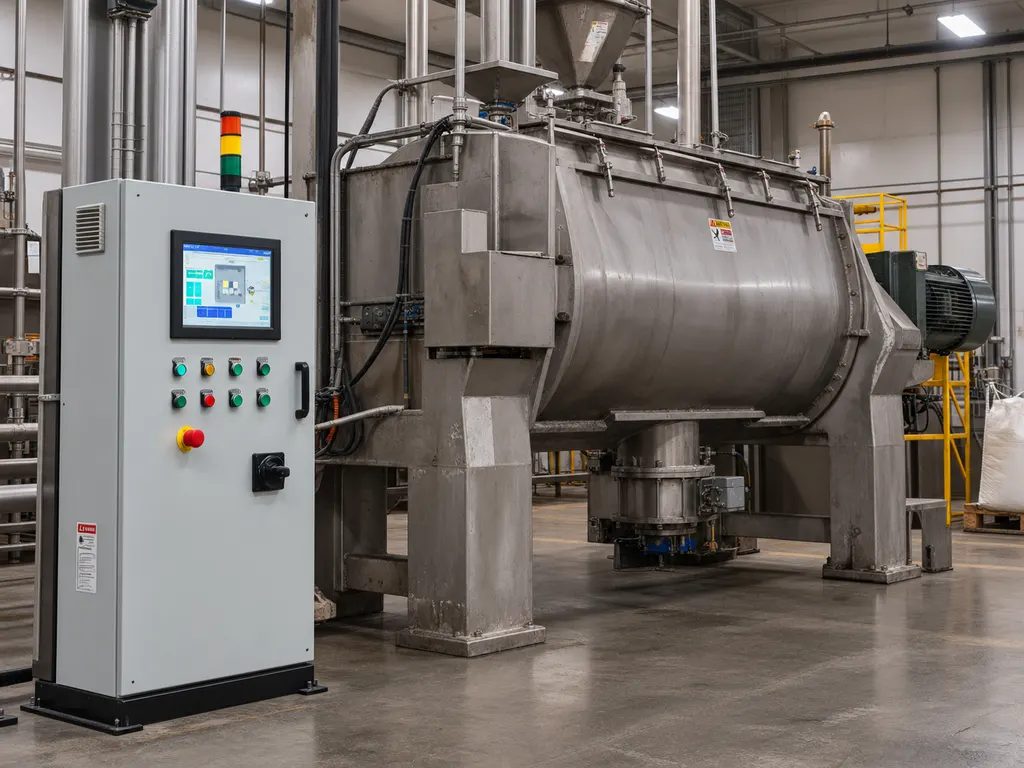
When a mechanically sound industrial mixer needs a proper control system, the objective is not simply to "install a PLC." A mixer has a process: a sequence of things that must happen, in order, under the right conditions, with the right things stopping operation when they should. Automating it well means capturing that process first, then engineering the controls around it.
Start by understanding how the machine must operate
Before any control system is designed, the important work is understanding the machine. Working with the plant's mechanical team, that discovery typically covers:
- the required operating sequence — what should happen, and in what order
- discrete inputs and outputs
- analog signals
- motor starters and sensors
- operator requirements and the machine's equipment states
- safety requirements
This information becomes the foundation for the automation architecture. Skipping it and jumping straight to hardware is how automation projects end up technically working but operationally wrong.
Translate the process into a control system
Once the process is understood, it can be turned into a control-system design:
- I/O architecture and analog signals
- motor control
- sensors and instrumentation
- the machine sequence itself
- operator controls
- safety logic
Then implementation follows: controls engineering, programming, installation, and integration with the existing mechanical machine.
Safety is part of the engineering, not a bolt-on
Safety belongs in the controls design and the operating sequence from the start — what conditions must halt the machine, how it behaves in a fault, what the operator must be able to do. Appropriate control measures are incorporated based on the machine's operating requirements and the project scope. (This is engineering practice, not a claim of any particular regulatory certification — formal compliance is its own separate, documented process.)
Verify before you call it done
The final step is verification: confirm operation, confirm the sequences, confirm the safety behavior, and commission the machine with the customer's team. A mixer that runs its sequence correctly on the bench but has not been verified against real operation is not finished.
Your team knows the machine; we bring the controls engineering
The plant team's knowledge of the mixer and how it needs to run is exactly what makes a good control system possible. Modernization pairs that knowledge with the controls, sequence, and safety engineering needed to turn a mechanical machine into a properly automated one — without replacing the mechanical equipment that still works.
Before you replace the machine, understand your options
A mixer that is mechanically sound but poorly automated is usually a controls project, not a replacement. The right first step is understanding what the equipment actually needs.