
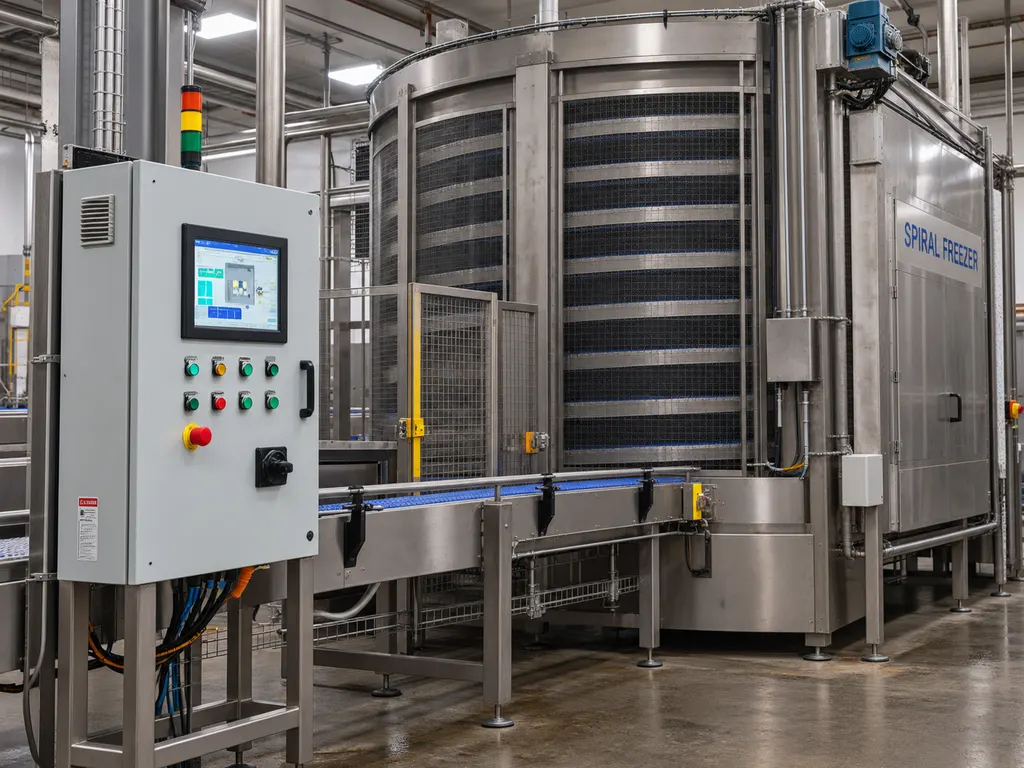
A spiral freezer is a large, expensive, mechanically robust asset. When its control system starts to feel dated — limited operator visibility, thin alarming, missing documentation — the instinct is sometimes to plan for a full replacement. Replacing a whole machine to solve a controls problem is often the most expensive path, and not always the necessary one.
The more useful question is narrower: does a machine that still freezes product reliably need an entirely new control system just because parts of its technology are aging? Often the answer is no.
Separate the machine from its controls
An aging spiral freezer typically has two very different stories running in parallel:
- The mechanical and refrigeration systems are frequently still doing their job. Belts, drums, evaporators, and the refrigeration loop can have years of useful life left.
- The control system — the operator interface, alarms, instrumentation, and documentation around it — is where age actually shows up first.
Treating those as one decision leads to replacing equipment that did not need replacing. Treating them separately is the start of a modernization plan.
The existing PLC may be worth keeping
An existing PLC can sometimes continue to serve the machine. If the controller still executes the freezer's logic reliably and can support the improvements you actually need, replacing it adds cost and risk without a corresponding benefit — which is what the documented spiral-freezer project found.
Modernization does not always mean replacing everything. It means evaluating what works, and then modernizing only what genuinely needs it. Keeping a functioning controller while improving what surrounds it is often the right engineering call.
What modernization usually improves
When the machine and controller stay, the modernization concentrates on the control environment:
- Operator interface / visualization — a modern HMI so operators can actually see what the freezer is doing.
- Alarms — additional alarm programming and clearer alarm visibility, so problems surface early instead of after the fact.
- Instrumentation — additional sensors where the machine was previously running with limited feedback.
- Connectivity — improved network or remote access where appropriate.
- Documentation — reconstructing and updating electrical and controls documentation, and mapping the existing inputs and outputs, so the system is maintainable going forward.
None of that requires discarding the freezer or its refrigeration system.
Why evaluate first
The reason to evaluate before prescribing is simple: the cheapest, lowest-risk project is the one that changes only what has to change. An assessment looks at the whole asset — mechanical condition, controls, instrumentation, documentation — and produces a recommendation rather than a foregone conclusion. Sometimes that recommendation is a targeted controls upgrade around an existing PLC. Sometimes it is something else. The point is to decide with evidence.
Modernization can preserve usable capital equipment and avoid unnecessary full-machine replacement — but only if you look before you leap.
Before you replace the machine, understand your options
If you have a spiral freezer that still freezes but whose controls are showing their age, the first step is not a purchase order — it is an evaluation of what the equipment actually needs.